
Dog Halloween costumes: comfort-first picks for dogs and cats, plus safety tips
 By Darcie Nolan
A good dog Halloween costume is one your dog barely notices. It fits, leaves the eyes, ears and mouth clear, has no small parts to chew off, and gets a few practice runs before the night. Light pieces such as a cape, wings or a bandana are the easiest start. Cats Protection says very few cats tolerate clothing, so keep cat costumes minimal or skip them.
Key takeaways
- The AVMA says a pet costume should fit properly, have no pieces that can be chewed off, and not block sight, hearing, breathing, the mouth or movement.
- The AVMA and the AKC both say never to leave a pet alone while it is wearing a costume.
- The AKC says to take a costume off right away if a dog seems stressed, keeps trying to remove it, or struggles to move comfortably.
- Cats Protection, a UK cat welfare charity, says cats who tolerate clothing are "quite rare", and that for most cats any clothing is stressful.
- The BC SPCA recommends at least two forms of ID on Halloween: a collar with tags, plus an ear tattoo or a microchip registered with the BC Pet Registry.
This guide has affiliate links to Amazon.ca. As an Amazon Associate, Stay Sit Snuggle earns from qualifying purchases, at no extra cost to you. How affiliate links work here.
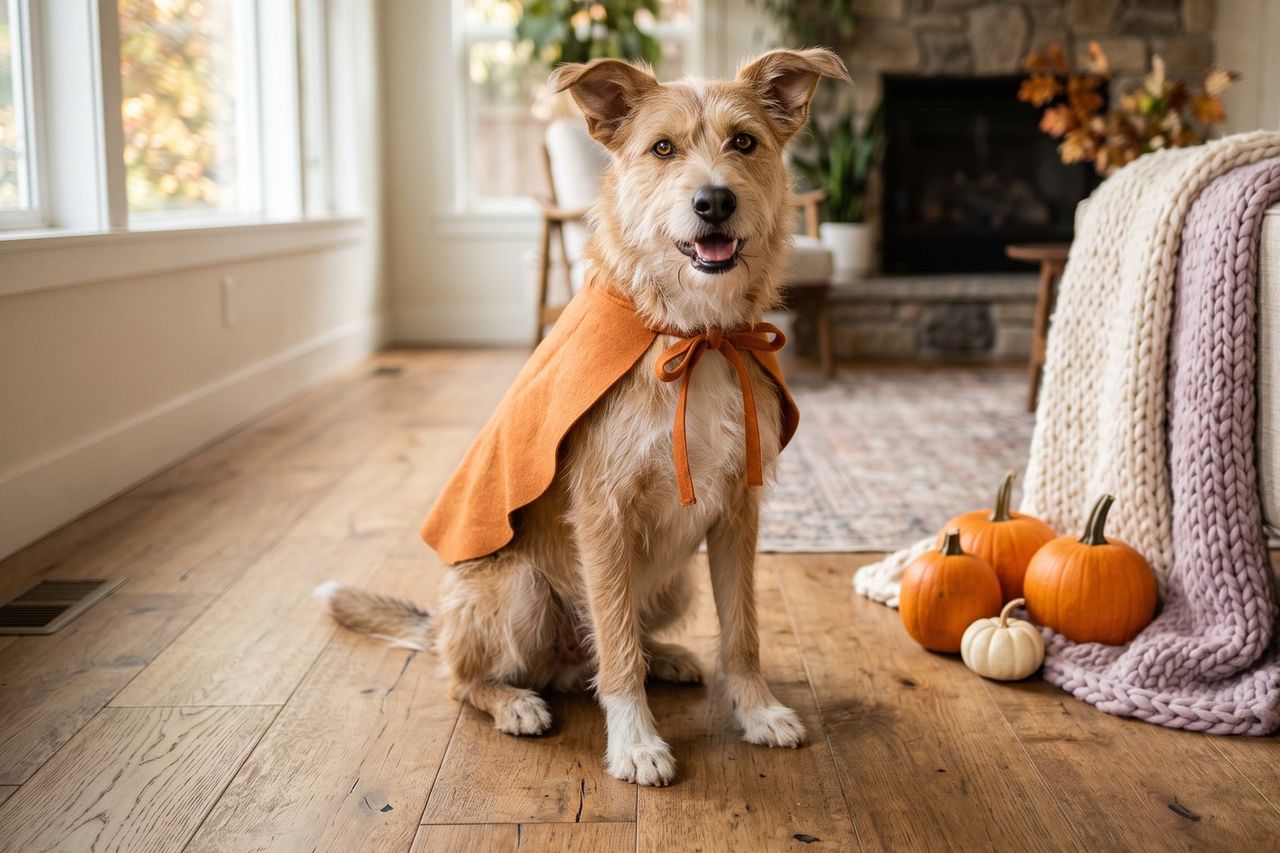
Halloween photos of a dog in a costume are hard to resist. The trick is choosing something your pet can wear without fuss, and knowing when to take it off. This guide starts with comfort, then gets to the costumes.
Do dogs like wearing costumes?
Some do and many don’t. The American Kennel Club (AKC) puts it simply: “Some dogs enjoy dressing up, while others clearly do not.” The ASPCA goes further and advises against a costume for a dog or cat “unless you know he or she loves it.”
The BC SPCA’s advice is to avoid costuming pets. It explains that a costume “inhibits an animal’s ability to move and communicate through natural body language such as tail wagging or positioning their ears,” and that costumes can cause pets to overheat. So if your dog is happiest in nothing at all, that is a fine answer too.
How can you tell if your pet is OK in a costume?
Watch your pet’s body language for the first few minutes, then keep watching. The AKC says to take a costume off right away if your dog:
- appears stressed
- tries again and again to remove the costume
- struggles to move comfortably
- shows other signs of discomfort, such as panting, freezing, refusing to move, pawing at the costume or flattened ears
Cats show stress in their own ways. Cats Protection lists trying to run away, hiding, hissing, lip licking, biting, clawing at the clothing, a hunched body, ears flat and wide pupils. It also warns that a cat who goes floppy or stops moving is not relaxed. That cat may have “shut down” because it cannot escape the outfit.
How do you choose a safe dog Halloween costume?
A safe dog Halloween costume fits well, keeps the face clear and has nothing small to chew off. The American Veterinary Medical Association (AVMA) says a pet costume should:
- fit properly and be comfortable
- have no pieces that can easily be chewed off or cause choking
- not block your pet’s sight, hearing, breathing, mouth or movement
The AKC adds that buttons, gems and other detachable decorations can become choking hazards. Check every seam and trim before the first try-on.
Measure before you order. The size charts in the listings below use chest size, neck size or back length (from the neck to the base of the tail). A soft tape measure gives you all three in a minute.
Practise before the night. The AVMA says to take time before Halloween to get your pet used to the costume, and the ASPCA says to have your pet try it on “before the big night.” The AKC suggests patience and high-value treats so the costume becomes a good thing. A few short try-ons over several days works better than one long one on October 31.
Never leave a costumed pet alone. The AVMA and the AKC both say this plainly. Costumes can shift, snag on furniture or turn into a chew toy.
| Costume type | Who it tends to suit | What to check |
|---|---|---|
| Cape or wings | First-timers and dogs who dislike hoods | Neck strap snug but not tight; nothing dangling |
| Back-mounted piece, such as a rider | Dogs fine in a light vest | Straps clear of the armpits; the piece cannot be chewed off |
| Full body suit or hoodie | Dogs who already wear coats | Chest and back length; no rubbing under the legs; heat |
| Hat or headpiece | Pets already relaxed about handling | Nothing over the eyes or ears; take it off first |
| Bandana or themed collar | Pets who will not wear a costume | Supervise, since a bandana can catch on things (AKC) |
Which costumes suit dogs who hate hoods?
For dogs who duck away from anything over the head, a cape or a pair of wings is the gentlest choice. Both leave the head, ears and tail free.
A cape is a good first costume because there is very little to get used to.
Wings work the same way for bigger dogs, and stiff felt keeps them from flopping into your dog’s face.
If your dog already wears a light vest, a piece that rides on the back gets a laugh without touching the head at all.
What costumes fit wide-chested and small dogs?
Short, sturdy dogs such as French bulldogs and pugs often struggle with costumes cut for a narrow chest. Look for a costume made for that shape, and check the chest measurement, not just the weight.
For small and medium dogs who already wear a coat, a pullover costume can feel familiar. The maker of this classic suggests it for pugs, French bulldogs and Boston terriers.
A costume that doubles as a fall hoodie earns its place after Halloween too.
What are good large dog Halloween costumes?
Large dogs need costumes sized by back length and chest, because sizes are not the same from one maker to the next. Read the size notes on each listing before you choose.
A dinosaur suit with spines down the back suits big dogs who are easy about being handled. The listing for this one says the large may run larger, so check the chart.
The lobster and the pumpkin, listed at the end of this guide, are other full-body options. For the pumpkin, many dogs are happier with the body alone and no cap.
Should you put a Halloween costume on your cat?
Usually not. Cats Protection, a UK cat welfare charity, says cats who tolerate clothing are “quite rare,” and its registered veterinary nurse explains that “for most cats, having any sort of clothing or accessories placed on them will be a stressful and uncomfortable experience.” Clothing can stop a cat from moving freely, grooming and staying cool.
Cats Protection suggests other ways to join in: a Halloween-themed toy, bed or blanket, adding costume effects to a relaxed photo with an app, or dressing up yourself. If you know your cat is one of the rare calm ones, keep it to something light around the neck, for a photo or two, and take it off at the first sign of stress.
What if your pet won’t wear a costume at all?
A themed bandana or collar lets your pet join in with almost nothing to get used to. The BC SPCA suggests a Halloween-themed collar or a walk on a leash with a spooky pattern. The AKC agrees that a simple accessory is often a better choice than a full costume, but says to let your dog wear a bandana only under supervision.
Can your dog wear a costume trick-or-treating?
Yes, if your dog is calm in it and you stay in control. The ASPCA says that if you take your pet out after dark, your pet should wear a reflective collar, be securely leashed and have proper identification attached. Skip any costume that makes walking awkward.
A light-up collar worn alongside the regular collar makes a dark dog easier for drivers and trick-or-treaters to see.
ID matters on Halloween night, even for pets who stay home. The BC SPCA says that opening the door to trick-or-treaters all evening “increases the chances that an animal may escape outside.” It recommends at least two forms of identification: a collar with tags, plus an ear tattoo or a microchip registered with the BC Pet Registry. Check that the phone number on file is current.
For pets staying in, the BC SPCA suggests a quiet room away from the door, and the AVMA suggests the same for pets who are wary of strangers. Keep the candy bowl where your pet can’t reach it.
Halloween is also a fireworks night in many BC communities, and rules differ from town to town. If loud bangs worry your dog, read what to do when your dog is scared of fireworks before the night.
Going out for Halloween?
If you are heading to a party and would rather not leave your dog or cat alone with the doorbell and the fireworks, Stay Sit Snuggle offers overnight stays in your home on Vancouver Island and in Vancouver and Edmonton.
Everything in this guide
Affiliate links to Amazon.ca. Prices and sizes change, so check the listing before you buy.
 CostumeGOYOSWA vampire cape for dogsSee it on Amazon.ca
 CostumeRYPET bat wings for bigger dogsSee it on Amazon.ca
 CostumeNACOCO cowboy rider dog costumeSee it on Amazon.ca
 CostumeiChoue bumblebee hoodie for wide-chested dogsSee it on Amazon.ca
 CostumeRubie's hot dog bun costumeSee it on Amazon.ca
 CostumeNACOCO shark hoodieSee it on Amazon.ca
 CostumeZack and Zoey pumpkin pooch costumeSee it on Amazon.ca
 CostumeDino pup costume for large dogsSee it on Amazon.ca
 CostumeCasual Canine lobster costumeSee it on Amazon.ca
 CostumeDC Comics Superman pet costumeSee it on Amazon.ca
 CostumeLion mane for cats and small dogsSee it on Amazon.ca
 CostumeRYPET bat wings for cats and small dogsSee it on Amazon.ca
 CostumeWitch cape and hat for cats and small dogsSee it on Amazon.ca
 Costumechoyaxo cowboy hat and bandana setSee it on Amazon.ca
 BandanaADOGGYGO pumpkin and ghost bandanaSee it on Amazon.ca
 VisibilityNovkin light-up LED collars, 2-packSee it on Amazon.ca
Questions people ask
Is glitter or face paint safe on a dog?
Leave it off. The American Kennel Club says glitter, dyes and other decorative materials can be harmful if a dog swallows them or if they irritate the skin, and to ask your vet if you are unsure about an accessory.
How long can a dog wear a Halloween costume?
Keep it short. The American Kennel Club suggests that with a more elaborate outfit, you leave it on only long enough to snap a few photos, then let your dog relax.
Is a costume with a hat or mask OK for my pet?
Skip anything that covers the face. The AKC lists face coverings among the features to avoid, and the AVMA says a costume should not block your pet's sight, hearing, breathing or mouth. A hat with a chin strap can come off and still leave the rest of the outfit.
What should I do with my pet during a Halloween party at home?
Give your pet a quiet room away from the guests and the front door. The AKC notes that guests, noise and changes in routine can already be stressful for a dog, so a costume on top of that may be too much.
Sources
- BC SPCA, 4 tips to keep your pet safe on Halloween (published October 25, 2025, updated October 2, 2026), checked
- American Veterinary Medical Association (AVMA), Halloween pet safety, checked
- ASPCA, Halloween safety tips, checked
- American Kennel Club, How to choose a Halloween costume for your dog (updated September 15, 2026), checked
- Cats Protection, Is it okay to dress up your cat? (November 14, 2024), checked
Published
Going away? Ask about your dates
Send your dates, your town and a note about your pets. Darcie will reply to confirm availability and set up a meet and greet.