
Storm season pet emergency plan for Vancouver Island (power outages, kits and vets)
 By Darcie Nolan
A pet emergency plan in BC covers three things: supplies at home, a grab-and-go bag for each pet, and written contacts. PreparedBC suggests pet food and water for three days to two weeks (or more). Write down your vet, the nearest emergency clinic and a neighbour who has a key, and check after-hours vet hours before a storm, not during one.
Key takeaways
- The PreparedBC pet emergency plan asks for pet-friendly emergency contacts, each pet's details and microchip number, your vet and the nearest emergency clinic, and health needs.
- PreparedBC suggests storing pet food and water for three days to two weeks or more, and BC Hydro asks every household to keep supplies for at least 72 hours.
- In a survey for BC Hydro, nearly three-quarters of British Columbians experienced at least one weather-related power outage in 2024.
- The Central Island Veterinary Emergency Hospital (CIVEH) in Nanaimo moved to urgent care 20 hours a day, seven days a week, on October 1, 2026, so call before you drive.
- PreparedBC says evacuees with pets can get help through the BC SPCA Helpline at 1-855-622-7722.
This guide has affiliate links to Amazon.ca. As an Amazon Associate, Stay Sit Snuggle earns from qualifying purchases, at no extra cost to you. How affiliate links work here.
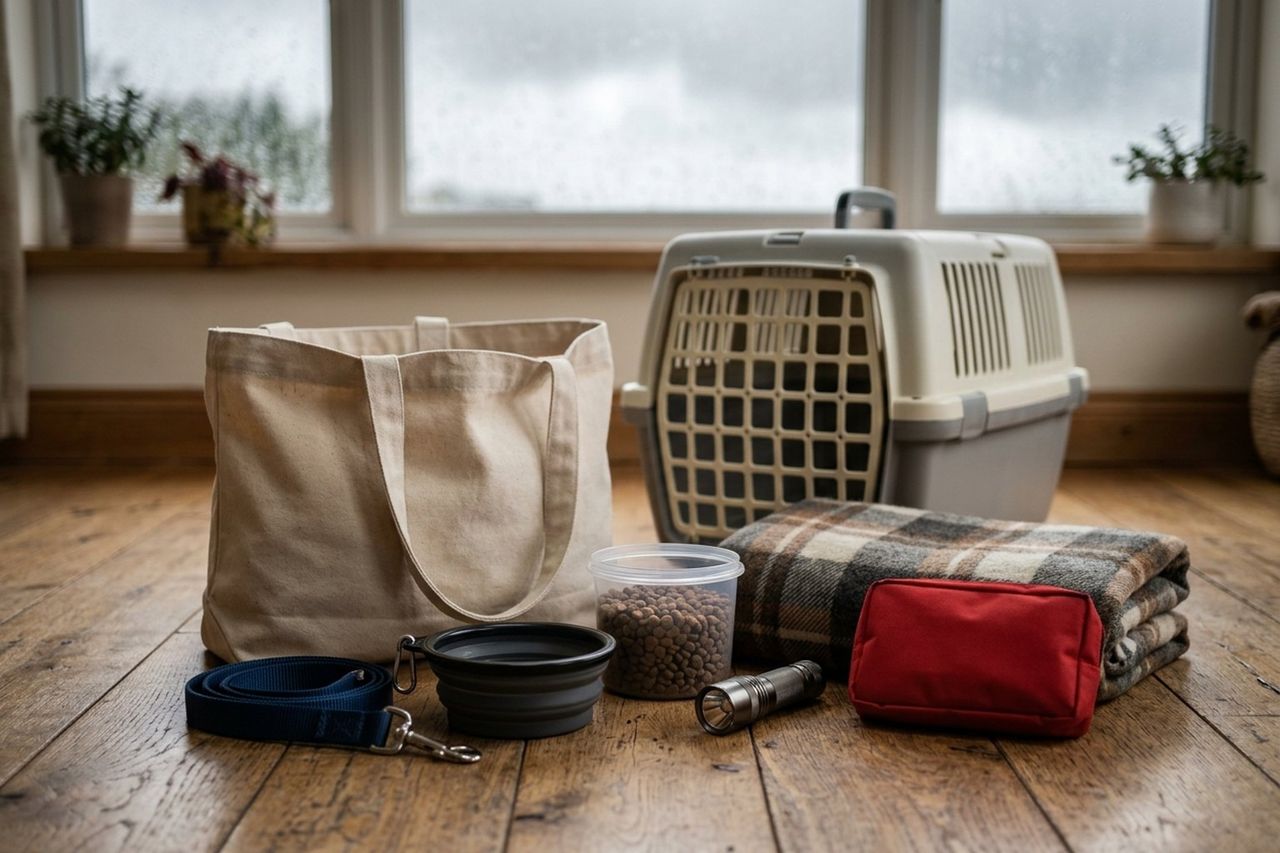
Big storms knocked out power across Vancouver Island in late 2024. A pet plan made on a calm day means you are not hunting for a carrier or a vet’s number in the dark. This guide follows the PreparedBC pet plan, adds a first aid kit list, and gives after-hours vet options for Nanaimo, Ladysmith and the Comox Valley.
Why do Vancouver Island pet owners need a storm plan?
Because outages here are common, and they can last. In a survey for BC Hydro, “nearly three-quarters of British Columbians experienced at least one weather-related power outage” in 2024 (BC Hydro, January 31, 2025).
The same release says over 1.4 million BC Hydro customers lost power to weather that year, the most in the company’s history. Most of it came from three powerful storms that hit the South Coast and Vancouver Island in November and December. BC Hydro asks every household to keep supplies for at least 72 hours.
What goes in a pet emergency plan in BC?
The PreparedBC pet emergency plan is a free fill-in form. It asks for four kinds of information:
- Pet-friendly emergency contacts: people you trust to take care of your pets.
- Pet information: name, type or breed, colour and markings, and microchip or tattoo number.
- Kennel, daycare and vet details: your own vet clinic and the nearest emergency clinic.
- Pet health: health concerns and medications for each pet.
Print it and keep it with your home emergency plan. Give a copy to anyone who cares for your pets while you are away. It fits well beside the notes in the pet sitter checklist.
What goes in a pet emergency kit?
PreparedBC lists these items for your emergency kit (PreparedBC pet emergency plan, October 2024):
- Collar, leash, harness or muzzle
- Pet carrier, cage or crate
- Pet food and water for three days to two weeks (or more)
- Collapsible food and water dishes
- Treats, a favourite toy and a blanket
- Medications and basic first aid supplies
- A copy of vaccination records
- Photos of your pets with you and alone
- For cats and dogs: poop bags, or a small container of litter and a scoop
PreparedBC also suggests extra medications in the kit if your pet needs them. Keep the kit somewhere easy to reach, not behind the holiday boxes.
Collapsible dishes are one of the easier items on that list to tick off. Silicone ones fold almost flat in a grab-and-go bag.
What goes in a pet first aid kit?
Start by asking your vet. The Canadian Disaster Animal Response Team (CDART), which PreparedBC points owners to, says to “check with your veterinarian” about what to include. Its dog shopping list suggests these items (CDART dog disaster kit list):
- A first aid book for dogs
- Conforming bandage, absorbent gauze pads and a gauze roll
- Cotton-tipped applicators and antiseptic wipes
- Tweezers and scissors
- An instant cold pack
- Disposable gloves
- A muzzle that fits
CDART explains the muzzle plainly: an injured animal may bite when in pain, even a friendly one. Use the kit to get your pet to a vet safely, then let the vet take over.
A ready-made kit for dogs and cats is one way to start. Add the items your vet suggests.
How much food and water should you store for your pet?
PreparedBC says three days to two weeks of food and water, or more. CDART’s dog list aims for the top of that range: a two-week supply of the food your dog already eats, and drinking water for at least two weeks for each dog. It also suggests small or pop-top cans if your dog eats canned food, since you may not be able to refrigerate leftovers.
A simple habit helps. Notice how much your pet eats and drinks on a normal day, and write it on the plan. Your vet can tell you what your own pet needs.
What do you do with pets during a power outage?
Keep the fridge shut, keep a light handy and keep your contacts close. A few steps from BC Hydro and PreparedBC:
- Keep the fridge closed. BC Hydro says “a full fridge can keep food cold for about four hours” (BC Hydro, August 31, 2026). If your pet takes a medication that lives in the fridge, ask your vet now what to do if the power is out for longer.
- Use flashlights. BC Hydro lists flashlights and extra batteries for every kit.
- Charge your phone. A power bank keeps your vet’s number and the outage map within reach.
- Pack for everyone. BC Hydro reminds households to include items for every member of the home, pets included.
Where are after-hours vets in Nanaimo, Ladysmith and the Comox Valley?
Call before you drive. Hours change, and some services are for a clinic’s own clients only. This table repeats what each clinic’s own page said when I checked it on October 3, 2026.
| Town | Clinic and phone | What its page says |
|---|---|---|
| Nanaimo | Mahalo Veterinary Hospital, 250-824-1444 | Urgent care 8 a.m. to 8 p.m. every day, for clients or non-clients. No overnight or specialist care. |
| Nanaimo | Coastal City Animal Hospital, 778-441-3989 | Walk-in urgent care Monday to Friday 8 a.m. to 7 p.m., weekends 9 a.m. to 5 p.m. Call on the way. |
| Ladysmith | VCA Canada Ladysmith Animal Hospital, 250-245-2274 | Open weekdays 8 a.m. to 5 p.m., closed weekends. Urgent cases only in those hours, so call ahead. |
| Courtenay | Courtenay Veterinary Clinic, 250-338-7721 | After hours, its answering machine gives the number for VetWise, a telemedicine service, 1-888-243-1411. |
| Courtenay | Comox Valley Animal Hospital, 250-339-2511 | For after-hours emergencies, call the main number to reach VetWise. |
| Courtenay | Country Animal Hospital, 250-338-7947 | After-hours on-call service seven days a week, including statutory holidays, for its own clients only. |
The emergency hospital for the Mid-Island is the Central Island Veterinary Emergency Hospital (CIVEH) at 6550 Metral Dr in Nanaimo, 250-933-0913. Its parent company, VetStrategy, told CHEK News that from October 1, 2026 it provides urgent care “20 hours a day, seven days a week” instead of 24-hour emergency care three days a week. It is not open all night, so call first. When CIVEH is closed, VCA Ladysmith refers owners to Central Victoria Veterinary Hospital, 250-475-2495.
In Comox, Canvas Veterinary Centre says urgent and emergency care is “coming to Comox, December 2026”. It has no posted hours yet.
For more detail on the Nanaimo side, read emergency vets in Nanaimo and Ladysmith. The Nanaimo pet sitting page and the Comox Valley pet sitting page carry the same clinic rows.
What should your pet sitter know about your storm plan?
Your sitter needs the same details you would give a neighbour. PreparedBC says to give a neighbour or trusted friend a key, tell them where your pets like to hide, and show them where the grab-and-go bag is.
Before I stay over for the first time, I come to your home for a meet and greet. That is a good moment to walk through the plan together. Show your sitter:
- where the kit, the carrier and the flashlights are
- where your pets hide when they are scared
- which vet to call, and the after-hours number from the table above
- who else has a key
I stay overnight in your home so your pets keep their routine. Leave the storm plan in writing with your other notes for the sitter. If you are still choosing someone, start with how to find a pet sitter you can trust.
What if you have to leave home with your pets?
Grab the carrier and the bag, and go. PreparedBC suggests practising now: get your pets in and out of their carriers at different times of day so they know what to expect.
A carrier that opens from the top as well as the front makes it easier to lift a reluctant cat in.
If you are evacuated, PreparedBC says help for evacuees with pets is available through the BC SPCA Helpline at 1-855-622-7722 or spca.bc.ca. Keep that number on your plan.
Stay Sit Snuggle offers in-home pet sitting on Vancouver Island and in Vancouver and Edmonton. On the Island, that means Ladysmith, Nanaimo, Cumberland, Courtenay and Comox. You can read more on the pet sitting page or ask about your dates.
Everything in this guide
Affiliate links to Amazon.ca. Prices and sizes change, so check the listing before you buy.
 TravelCOMSUN collapsible bowls, 2-packSee it on Amazon.ca
 First aid kitFirst Aid Central kit for dogs and cats (39 pieces)See it on Amazon.ca
 CarrierAmazon Basics two-door hard carrier (58 cm)See it on Amazon.ca
 EmergencyPet alert window clings (6-pack)See it on Amazon.ca
 Automatic feederYuposl battery automatic feeder (3 L)See it on Amazon.ca
Questions people ask
How often should I update my pet emergency plan?
BC Hydro recommends reviewing your emergency plan once a year and whenever things change, and it names a new pet as one of those changes. A phone reminder once or twice a year also helps you swap out expired food and medication.
How long does a freezer stay cold in a power outage?
BC Hydro says a full freezer can keep food frozen for up to 48 hours, and a half-full freezer for about 24 hours, as long as you keep the door closed.
Where do I register my pet in BC?
PreparedBC tells owners to register their pets with BCPetRegistry.ca and to update the details if you move or your information changes.
What if my pet panics during an emergency?
PreparedBC says animals can become disoriented, frightened or aggressive in emergencies. It suggests packing a towel with your scent on it to help calm your pet, and thick gloves for handling a panicked pet. Call your vet if your pet is hurt.
Sources
- CHEK News, Nanaimo emergency veterinarian changing to more consistent opening hours (July 28, 2026), checked
- PreparedBC, Pet emergency plan (last updated October 2024), checked
- BC Hydro, 2024: a record-breaking year for storm outages (January 31, 2025), checked
- BC Hydro, Storm season is coming. Are you ready? (August 31, 2026), checked
- Canadian Disaster Animal Response Team (CDART), Disaster preparedness shopping list for dogs, checked
- Mahalo Veterinary Hospital, Urgent care, checked
- Coastal City Animal Hospital, Urgent care, checked
- VCA Canada Ladysmith Animal Hospital, In an emergency, checked
- Courtenay Veterinary Clinic, Emergencies, checked
- Comox Valley Animal Hospital, Home page hours and after-hours line, checked
- Country Animal Hospital, Emergency and critical care, checked
- Canvas Veterinary Centre, Home page, checked
Published
Going away? Ask about your dates
Send your dates, your town and a note about your pets. Darcie will reply to confirm availability and set up a meet and greet.