
Pet sitter checklist: what to leave for your pet sitter
 By Darcie Nolan
A pet sitter checklist puts everything your sitter needs on one page: your contacts and travel dates, a local backup with a key, your vet and the nearest emergency clinic, exact meal amounts and times, medication notes, routines, hiding spots and fears, and house notes like keys, alarm and Wi-Fi. Fill it in before you go and leave it where your sitter will see it.
Key takeaways
- A pet sitter checklist lists your contacts and travel dates, a local backup with a key, your vet and the nearest emergency clinic, and each pet's microchip number.
- Write each pet's food amount per meal in cups or grams, not scoops, and leave more food than the trip needs in case flights or sailings are delayed.
- Copy medication instructions from your vet word for word, and keep the medicine in its original packaging.
- WildSafeBC advises pet owners to keep pets indoors, especially at night, and to feed pets indoors.
- On Vancouver Island, show your pet sitter the breaker panel and flashlights; the BC Hydro outage line is 1-800-BCHYDRO (1-800-224-9376).
This guide has affiliate links to Amazon.ca. As an Amazon Associate, Stay Sit Snuggle earns from qualifying purchases, at no extra cost to you. How affiliate links work here.
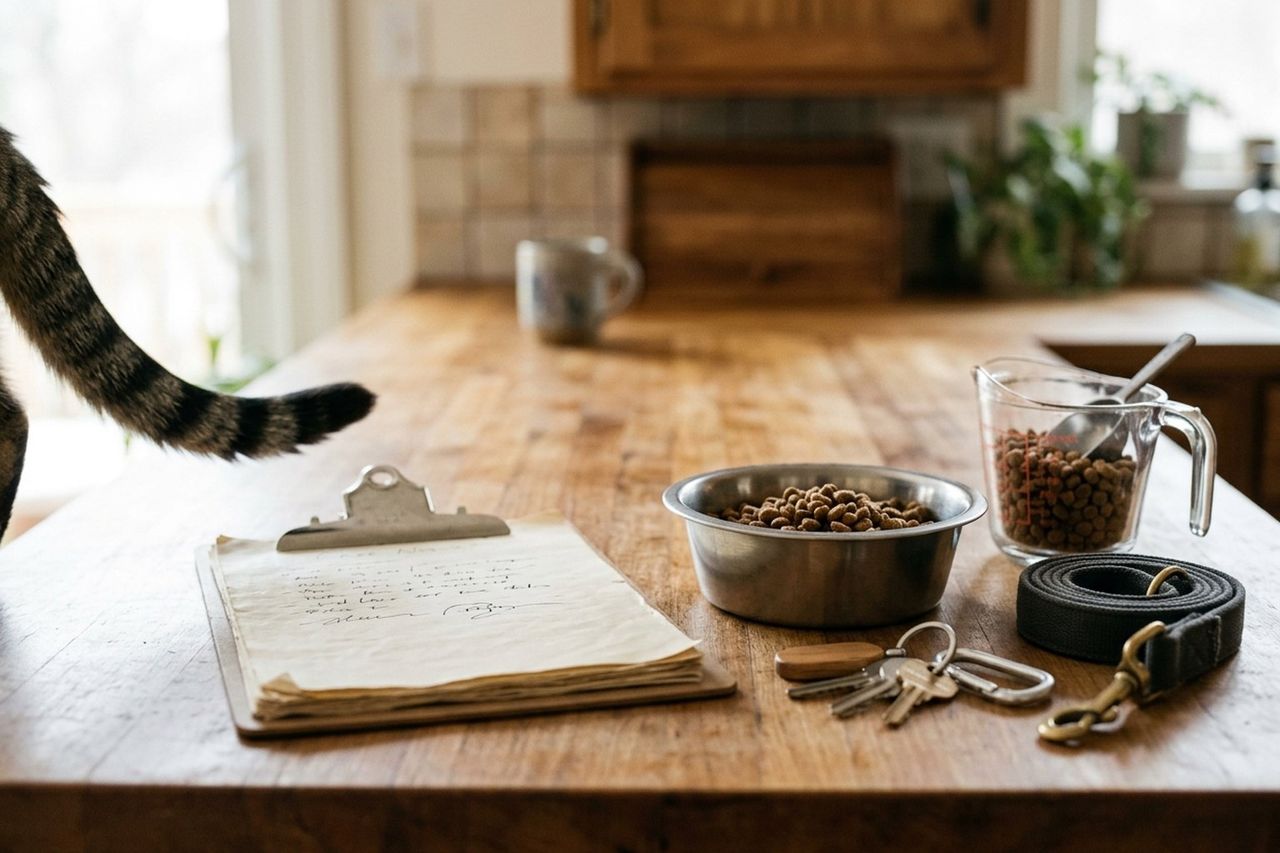
Your pet sitter can work out a lot on their own. What they can’t work out is the small stuff only you know: the cat who eats only by the window, the dog who needs a treat before the crate, the back door that sticks.
This pet sitter checklist covers all of it. Copy it, fill it in and leave it on the fridge.
What goes on a pet sitter information sheet?
The information sheet is page one. It holds the people and places your sitter may need in a hurry.
PreparedBC’s pet emergency plan (October 2024) is a good model. It asks for “people you trust to take care of your pet(s)”, each pet’s microchip number or tattoo code, and “your vet clinic, including the nearest emergency clinic.” Put the same things on your sheet:
- Your phone number, email and travel dates
- A local backup contact who has a key
- Your vet clinic’s name, phone and address
- The nearest emergency clinic, with its phone number
- Each pet’s name, breed, colour and markings, and microchip number
- Your kennel or daycare, if you use one
PreparedBC also suggests you register your pet with the BC Pet Registry, which the BC SPCA runs to help reunite lost pets with their owners. If your pet is already registered, check that your phone number is current before you leave.
Check the phone number on your pet’s collar tag at the same time. If the old tag is hard to read, a deeply engraved steel tag is one option.
What should I leave for my pet sitter about food and routine?
Pets cope with a new person far better than a new schedule. Write the day down the way it really happens.
| Leave this | Why your sitter needs it |
|---|---|
| Food name and amount per meal, in cups or grams | “One scoop” means different things to different people |
| Meal times, even rough ones | Your pet’s body clock expects them |
| Treats that are allowed, and foods that are not | Stops kind but risky extras |
| Walk or play times and how long they last | Keeps energy and toilet breaks on track |
| Bedtime habits: where they sleep, crate open or shut, which light stays on | A familiar night settles a nervous pet |
| Hiding spots | Nobody panics when the cat disappears |
| Fears and escape habits | Your sitter can plan around them |
Leave more food than the trip needs. Flights and sailings get delayed.
What pet sitter instructions do you need for medication?
If your pet takes anything, your vet’s instructions are the ones that count. Copy them onto the sheet word for word: the medicine’s name, how much, what time and how you give it. Note what to do if a dose is missed, in your vet’s words, not your own guess.
Keep medicine in its original packaging. PreparedBC’s plan also has a “Health concerns” line for each pet. Use it for anything that is normal for your pet but could worry someone else, like an old dog who sleeps very deeply or a cat who hides for the first day.
What notes should you leave for a dog sitter?
A dog sitter checklist adds a few lines that cat owners can skip:
- Where the leash, harness, poop bags and towels live
- Which routes your dog likes, and any dogs or places to avoid
- Pulling, barking or lunging habits, and what calms your dog down
- Door habits, like a dog who bolts when the front door opens
- Crate rules and any rooms that are off limits
What goes on a cat sitter checklist?
Cats notice every change, so a cat sitter checklist is mostly about keeping things the same:
- Where the litter box is, how often you scoop and where the spare litter is kept
- Where your cat eats, drinks and sleeps
- Whether your cat goes outside, and when it must come back in
- Favourite hiding spots, so your sitter can check on your cat without a search
If your cat goes out, add a bring-in time. WildSafeBC’s cougar safety advice is to “Keep your pets indoors, especially at night” and to “Feed your pets indoors.”
What house notes does a pet sitter need?
Your house notes save a lot of texting. Tell your sitter:
- Which key opens which door, and the alarm code
- The Wi-Fi name and password
- The thermostat setting you want kept
- Garbage and recycling day
- Where the cleaning spray, paper towels and spare supplies are
What should Vancouver Island pet owners add?
Living on Vancouver Island adds a few lines no generic template has.
Storm-season outages. Show your sitter the breaker panel and where the flashlights are. BC Hydro’s storm-season advice (August 31, 2026) is to keep flashlights and extra batteries in your emergency kit. Its outage line is 1-800-BCHYDRO (1-800-224-9376). Note a warm room for your pets if the heat goes off.
Your nearest emergency vet. Emergency hours on the Island vary by clinic and by day, so write down the clinic nearest your home and tell your sitter to call before driving. The Nanaimo and Ladysmith pet sitting page and the Comox Valley pet sitting page list local clinics and their after-hours arrangements. For a fuller plan, read the Vancouver Island pet emergency plan.
Your ferry or flight. Write down your sailing or flight and your expected arrival home. If weather could hold you up, tell your sitter how you will reach them.
What is on the full pet sitter checklist?
Here is the whole pet sitter checklist in one list, ready to copy:
- Your phone, email and travel dates
- Backup contact nearby with a key
- Vet clinic name, phone and address
- Nearest emergency clinic and its phone number
- Each pet’s name, breed, colour, markings and microchip number
- Food name, amount per meal and meal times
- Treats allowed and foods not allowed
- Medication, copied from your vet’s instructions
- Health notes: what is normal for your pet
- Walk, play and bedtime routine
- Hiding spots, fears and escape habits
- Leash, litter and supply locations
- Keys, alarm code, Wi-Fi and thermostat
- Garbage day
- Breaker panel and flashlights
- Bring-in time for outdoor cats
- Your ferry or flight details
PreparedBC also suggests you tell your key holder “any likely hiding spots and where your pet’s grab-and-go bag is located.” Your sitter needs the same two facts.
How should the handover go on the day?
Keep it short and calm. Walk through the routine, show where the food lives and let your pet see you and your sitter together. Then go. A quick, cheerful goodbye is usually easier on a pet than a long one.
Much of this list gets filled in before the trip. Before a first booking, I meet your pets at home and go through their routine with you. While you are away, I stay overnight in your home, so your pets keep their own beds and their own day. Stay Sit Snuggle sits on Vancouver Island and in Vancouver and Edmonton. You can see how it works on the in-home pet sitting page.
Still choosing someone? Start with how to find a pet sitter and what happens at a pet sitter meet and greet. Planning the whole trip? The vacation checklist with pets covers the two weeks before you leave. Cat owners can also read how long you can leave a cat alone.
Everything in this guide
Affiliate links to Amazon.ca. Prices and sizes change, so check the listing before you buy.
 ID tagEngraved ID tag, made in CanadaSee it on Amazon.ca
 EmergencyPet alert window clings (6-pack)See it on Amazon.ca
 Pet cameraTapo C210 pan and tilt cameraSee it on Amazon.ca
 First aid kitFirst Aid Central kit for dogs and cats (39 pieces)See it on Amazon.ca
 DistractionLUKITO lick mat, 2-packSee it on Amazon.ca
 DistractionKONG Classic, medium, 2-packSee it on Amazon.ca
Questions people ask
How much food should I leave for a pet sitter?
Leave enough for every day you are away, plus a few extra days in case your trip runs late. Write the amount per meal in cups or grams, not "one scoop", so anyone can measure it the same way.
Should I tell my vet I am using a pet sitter?
Yes. Call before you leave, give them your sitter's name and your travel dates, and ask what they need from you if your sitter has to bring your pet in while you are away.
Is there a free pet sitter checklist template?
The full checklist on this page is free to copy or print. Paste it into a document, fill in your own answers, and leave a copy on the fridge and another with your sitter.
What if my pet sitter cannot reach me?
That is what the backup contact is for. Name one person nearby who has a key, knows your pets and can make a decision if you are on a plane, a ferry or out of cell range.
Sources
- PreparedBC, Pet emergency plan (last updated October 2024), checked
- BC Pet Registry, home page, checked
- WildSafeBC, Cougar, checked
- BC Hydro, Storm season is coming (August 31, 2026), checked
Published
Going away? Ask about your dates
Send your dates, your town and a note about your pets. Darcie will reply to confirm availability and set up a meet and greet.